NaijaTalk
|2026-10-31
Peter Obi Calls on Tinubu to Step Down, Cites Leadership and Governance Concerns
Peter Obi Calls on Tinubu to Step Down, Cites Leadership and Governance Concerns
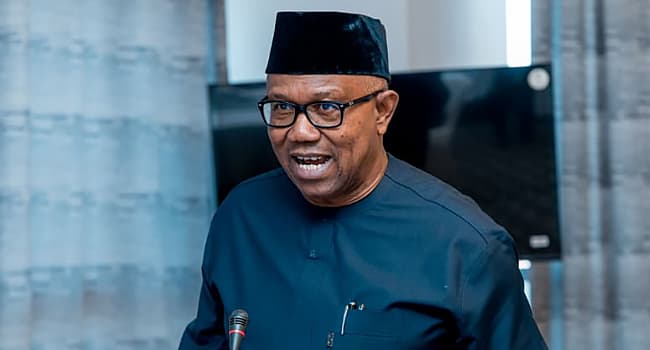
Former Anambra State Governor and presidential candidate of the Nigeria Democratic Congress (NDC), Peter Obi, has called on President Bola Ahmed Tinubu to leave office, accusing his administration of failing to adequately address Nigeria's economic, security and social challenges. Obi made the remarks on Thursday, October 29, 2026, during a town hall meeting in Abakaliki, the Ebonyi State capital, where he criticised the President's leadership capacity and questioned his commitment to addressing the country's pressing problems. The former governor argued that Nigeria requires leadership with the energy, competence and commitment to respond effectively to the difficulties facing citizens.
He maintained that Tinubu should retire from office rather than continue leading the country under the present circumstances. The Guardian Nigeria
Obi further challenged Tinubu to visit Abakaliki and other parts of the country to explain what his administration had achieved since assuming office in May 2023. He specifically questioned how the billions of dollars borrowed by the Federal Government, alongside revenue generated during the administration, had been utilised.
According to Obi, Nigerians deserve a clear account of government expenditure, particularly at a time when many households and businesses are struggling with rising living costs, unemployment, hunger and insecurity. He also criticised the President's reported position that he might not campaign across all 36 states ahead of the 2027 general elections because of the responsibilities of governance. Obi questioned this position, arguing that Tinubu had spent more than 260 days outside Nigeria since becoming President but was unwilling to dedicate 36 days to visiting states and explaining his administration's record to Nigerians.
He said presidential leadership requires considerable time, energy and direct engagement with citizens, particularly when seeking another term in office. Obi • Channels Television+2
Obi Outlines Seven-Point Emergency Agenda
During the meeting, Obi also presented a seven-point emergency agenda outlining what he would prioritise if elected President in 2027. The proposed agenda covers national unity, security, the fight against corruption, education, hunger and food security, healthcare and other critical development challenges.
On national unity, Obi warned against ethnic and regional divisions, insisting that Nigerians should be treated equally regardless of whether they are Hausa, Yoruba, Igbo or from other ethnic groups. He promised to uphold the Federal Character principle in public appointments and employment opportunities. On security, he pledged to declare an emergency on the protection of lives and property, promising to equip security agencies and take stronger action against kidnappers, bandits and other criminal groups.
He also promised a more aggressive campaign against corruption, stating that public funds must be used for the benefit of citizens. He warned that anyone found guilty of stealing public resources would face the consequences of the law, including the President. On education, Obi expressed concern about the number of Nigerian children currently out of school.
He cited an estimated figure of more than 18 million children and promised to make improving access to education a national priority. Regarding agriculture and food security, he argued that farmers must be able to return safely to their farms to increase food production, reduce hunger and strengthen Nigeria's capacity to export agricultural products. On healthcare, he promised to ensure that every political ward in the country has access to functional healthcare facilities, arguing that Nigeria has sufficient resources to improve basic medical services.
He maintained that these priorities would form part of a broader effort to address poverty, unemployment and other challenges affecting Nigerian households. Obi • Channels Television+1
Obi Warns Against Ethnic Politics
The former Anambra governor also used the opportunity to appeal to residents of Ebonyi State and other South-Eastern states not to support his presidential ambition solely because of his ethnic background. He insisted that his ambition was based on his qualifications and capacity to lead Nigeria rather than regional or ethnic considerations.
Obi urged Nigerians to assess political candidates based on their records, policies, competence and ability to deliver meaningful development. He maintained that national unity must remain a central priority and that no ethnic group should feel excluded from opportunities in government. The meeting attracted several political stakeholders and supporters of the NDC, including party officials and candidates in Ebonyi State.
The event formed part of the party's engagement with supporters and its wider preparations for the 2027 general elections. Obi+1
2027 Presidential Contest Gains Momentum
Obi's latest comments come as political activities intensify ahead of Nigeria's 2027 presidential election. President Tinubu formally launched his re-election campaign in Kaduna on October 24, 2026, seeking another four-year mandate under the APC.
The election is scheduled for January 16, 2027, according to reports. Reuters
Obi, who contested the 2023 presidential election under the Labour Party, is now the presidential candidate of the Nigeria Democratic Congress. His emergence under the NDC has added another dimension to the developing opposition contest ahead of the next election.
His criticism of Tinubu's administration has increasingly focused on economic hardship, insecurity, public borrowing, unemployment and the need for greater accountability in government. The President's administration, meanwhile, has defended its economic reforms, arguing that measures introduced since May 2023 are intended to improve public finances, attract investment and strengthen the Nigerian economy, although the reforms have also been associated with significant cost-of-living pressures. As political parties prepare for the 2027 elections, the exchange of criticisms and policy proposals is expected to remain a major feature of the political landscape.
Obi's call for Tinubu to step down has added to the debate over presidential accountability, leadership capacity and the direction of Nigeria's development. The President has not, in the reports reviewed for this article, issued a specific response to the latest October 29 remarks.
reference: https://www.channelstv.com/2026/10/29/2027-tinubu-doesnt-have-energy-competence-to-run-nigeria-obi/?utm_source=chatgpt.com
Subscribe To Get Updates on Our Latest Blog Post
No credit card required
0 Comments
No comments yet.
Leave Your Comment
You may also like

NaijaTalk
Subscribe